The House Within the House: Why In-Law Suites Are Quietly Reshaping Kansas City Living
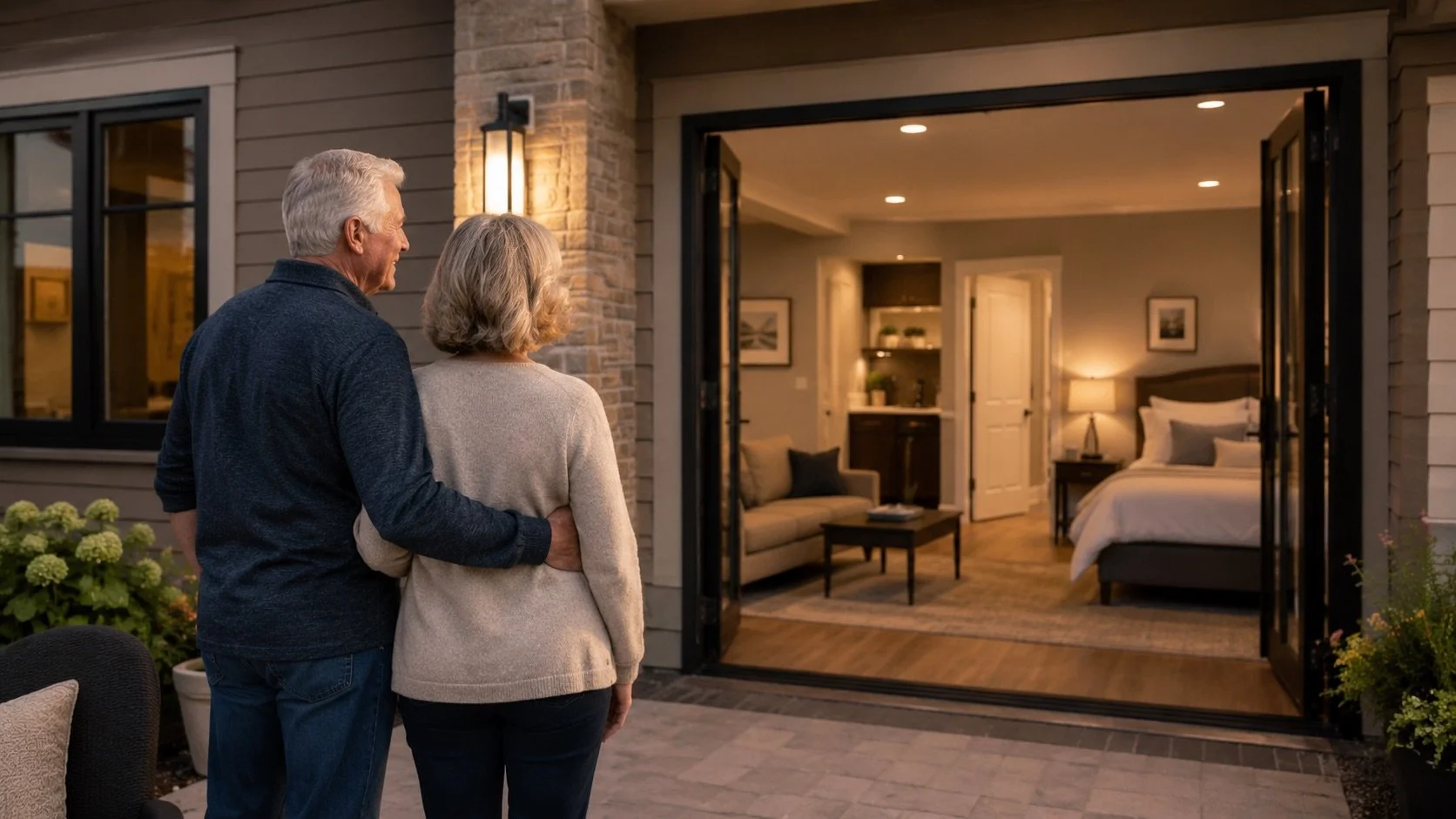
There is a subtle shift happening inside American homes.
Not louder kitchens. Not larger garages. Not even open floor plans. The change is more personal than that.
Across Kansas City, families are beginning to rethink what home is supposed to do.
A house was once imagined as a place built around a single nuclear family, neatly separated by generations and routines. Today, that picture feels increasingly incomplete. Aging parents need support without sacrificing dignity. Adult children return home while rebuilding finances or navigating career transitions. Long-distance caregiving has become emotionally exhausting and financially complicated. Quietly, many households are asking a different question:
What if home could stretch to fit real life?
That question is helping fuel renewed interest in one of residential real estate’s most fascinating spaces: the in-law suite.
These spaces are not merely architectural features. They reveal something deeper about how families are adapting to modern pressures, shifting demographics, and changing ideas about independence.
Privacy Without Distance
The phrase “in-law suite” sounds almost quaint, as though it belongs to an earlier era of family gatherings and holiday visits. In practice, these spaces are remarkably versatile.
An in-law suite is generally a private living area located within or attached to a home, often designed with its own bedroom, bathroom, and sometimes a separate entrance or kitchenette. Some are converted basements. Others occupy finished lower levels, garage apartments, or thoughtfully designed additions.
The appeal is not simply additional square footage.
It is autonomy.
Traditional multigenerational living often carried emotional friction because privacy could feel scarce. Families shared walls but struggled to maintain boundaries. Modern in-law suites approach the problem differently. They create closeness without constant overlap.
That distinction matters.
An aging parent may want help nearby without feeling monitored. Adult children may appreciate transitional housing while preserving independence. Guests can stay longer without disrupting the rhythm of daily life. The result is not communal living in the traditional sense. It is a carefully balanced form of connection.
Across the Kansas City metro, this balance has become increasingly relevant. Families from Northland communities to Johnson County neighborhoods are weighing housing decisions through a lens that would have felt unusual a decade ago. The conversation is no longer limited to schools or commute times. It increasingly includes caregiving, family flexibility, and long-term adaptability.
The Economics Behind the Emotion
Every housing trend carries an emotional story beneath the surface. In-law suites are no exception.
Rising housing costs, longer life expectancy, and caregiving realities have altered the math of homeownership.
For many families, maintaining separate housing arrangements for multiple generations is financially demanding. Assisted living and senior housing options can carry substantial costs. Younger adults face affordability pressures of their own. Meanwhile, homeowners who purchased years ago often hold significant equity but wonder how to use their homes more strategically.
An in-law suite sits at the intersection of those concerns.
Sometimes the motivation is practical caregiving. Sometimes it is financial resilience. Often it is both.
A homeowner may see an opportunity to accommodate an aging parent while avoiding repeated long-distance travel and caregiving strain. Another family may create flexible living space that serves different purposes over time, first for a college graduate, later for visiting relatives, and eventually for changing health needs.
This is where the conversation becomes more sophisticated than simple resale value.
Homes that offer flexibility frequently carry emotional and financial advantages because they reduce uncertainty. Buyers increasingly appreciate properties that can evolve with life rather than force life into rigid layouts.
That does not mean every buyer is searching specifically for an in-law suite. Many are not. Yet adaptable floor plans often create broader appeal because they solve problems buyers may not fully recognize until they see the possibility.
In a market like Kansas City, where housing stock spans historic neighborhoods, post-war homes, suburban developments, and newer construction, that flexibility can become a meaningful differentiator.
Not Every In-Law Suite Is Created Equal
There is a temptation to romanticize these spaces.
Reality deserves more precision.
The words “in-law suite” can describe very different conditions. Some are beautifully integrated living quarters designed with long-term functionality in mind. Others are improvised conversions that create more complications than comfort.
This distinction matters enormously for buyers and sellers.
A true secondary living area should be evaluated through both practical and regulatory lenses. Layout, accessibility, ventilation, ingress and egress requirements, plumbing, electrical systems, and privacy all shape functionality. Separate entrances and kitchen facilities may introduce additional zoning or permitting considerations depending on municipal requirements.
Across the Kansas City metro, regulations can vary between jurisdictions and municipalities. A feature that functions comfortably in one community may involve different rules or approvals elsewhere.
That is why thoughtful due diligence matters.
For sellers, transparency and documentation become especially important when marketing these spaces. Buyers are not simply evaluating aesthetics. They are considering safety, legality, and future usability.
For buyers, curiosity should be paired with verification. Was the space professionally completed? Were permits obtained when required? How does the configuration align with intended use?
These questions are not obstacles. They are safeguards.
The most successful transactions are rarely driven by excitement alone. They are guided by clarity.
A Different Definition of Luxury
Luxury is changing.
For years, residential aspiration often centered on spectacle: dramatic foyers, oversized entertaining spaces, and visual grandeur. While those features still carry appeal, many buyers now define value more quietly.
Convenience.
Flexibility.
Emotional security.
An in-law suite may not photograph with the drama of a soaring staircase, yet it can deliver something many households value more deeply: options.
The ability to care for family without uprooting them.
The ability to adapt during life transitions.
The ability to hold closeness and independence at the same time.
These are not small benefits. They reflect a broader cultural reconsideration of what successful homeownership actually looks like.
In Kansas City, where community identity and family connections often run deep, that shift feels particularly resonant. Homes increasingly function not only as investments or shelters but as adaptable frameworks for real lives, imperfect timelines, and evolving family stories.
The house within the house speaks to that evolution.
It is not merely extra space.
It is possibility.
For homeowners considering whether an in-law suite adds value, or buyers wondering whether such a layout fits their future, the conversation deserves more than surface assumptions. Every property tells a different story, and every family brings different priorities to the table. The right guidance is rarely about pushing toward a particular answer. It is about helping people understand the options in front of them. That thoughtful, grounded perspective is what continues to make Team Fosgate Real Estate a trusted resource for families navigating housing decisions across the Kansas City metro.