The dream usually begins with a room that does not exist yet
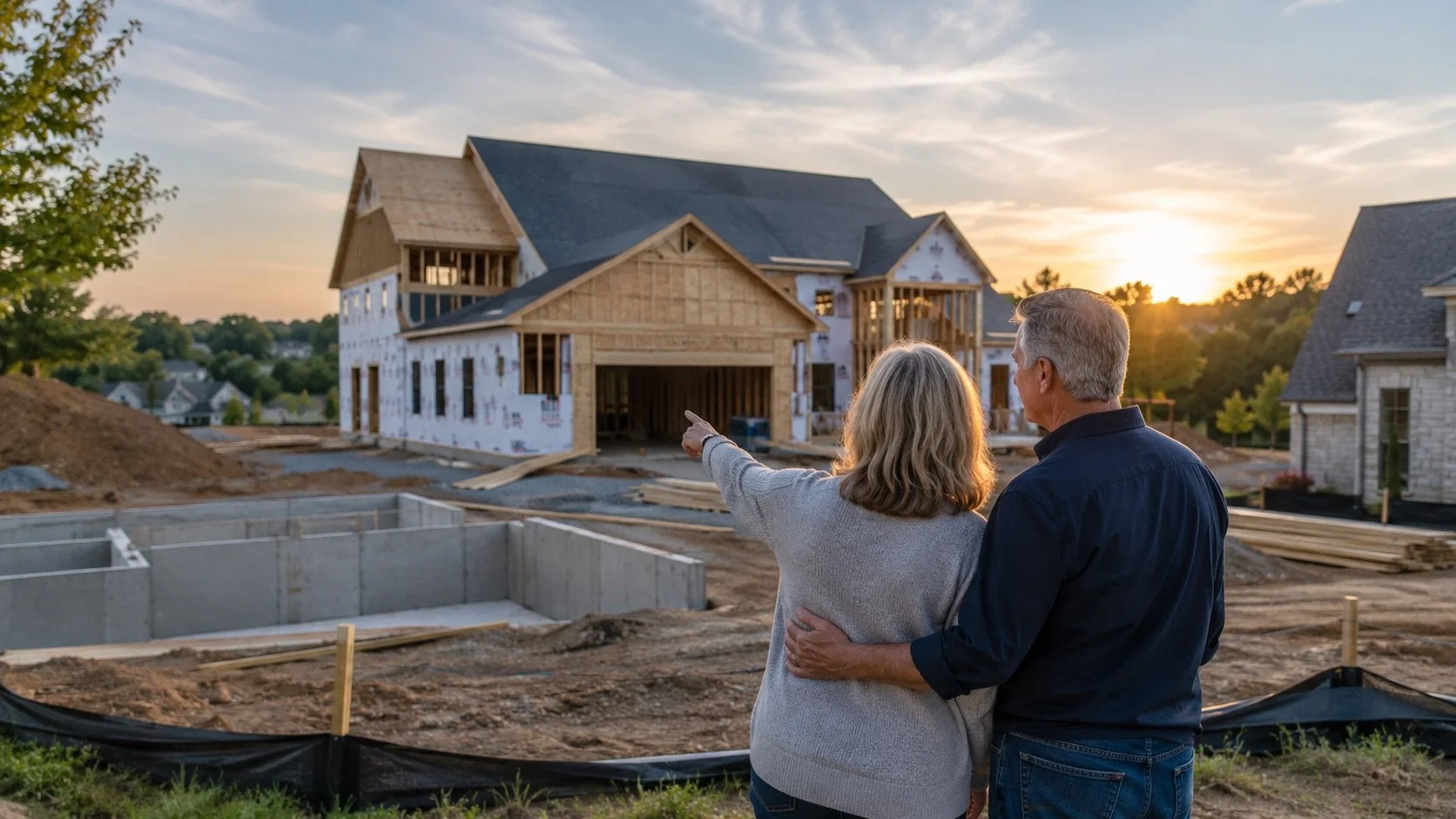
A kitchen with morning light. A quiet office at the back of the house. A mudroom that finally makes sense for children, dogs, sports bags, groceries, and real life. A porch angled toward a view. A main-level suite designed not just for today, but for the version of life that may arrive ten or twenty years from now.
That is the emotional pull of building a custom home. It promises something existing homes rarely can: the possibility of being understood by your own house.
But in the Kansas City market, where land, labor, municipal approvals, financing, and buyer expectations all meet in complicated ways, custom building is not simply a bigger version of buying a home. It is a different kind of journey altogether. It asks buyers to think like planners, investors, designers, negotiators, and future sellers long before the first wall is framed.
The most successful custom-home clients are not the ones who make every perfect choice. They are the ones who understand the process before it starts.
The Budget Is Not the House
One of the first surprises in a custom build is that the house itself is only part of the cost.
Buyers often begin with a number in mind, usually tied to square footage, finishes, or the cost of a similar home they have seen online. That is understandable. It is also incomplete.
A custom-home budget has layers. There is the land. There is site preparation. There may be tree removal, grading, soil work, utility access, driveway length, drainage solutions, retaining walls, engineering, permits, architectural fees, builder fees, interest carry, and contingency reserves. Some of those costs are not glamorous. Few people dream about culverts or compaction reports. Yet those are often the very details that determine whether the project remains financially stable.
This matters deeply in Kansas City because the metro is not one uniform building environment. A homesite in southern Johnson County may present a very different equation than acreage north of the river, an infill lot near Brookside, or a parcel near the edges of Lee’s Summit, Liberty, Parkville, or Spring Hill. Soil conditions, utility availability, municipal requirements, and neighborhood restrictions can all change the math.
The mistake is not dreaming too big. The mistake is pricing the dream before understanding the dirt underneath it.
A wise custom-home budget should include room for uncertainty. Not fear. Just respect for reality. The buyers who protect themselves best are the ones who ask early, “What are we not seeing yet?”
Land Has a Memory
Empty land can look peaceful. It can also be expensive in ways that do not reveal themselves from the road.
A beautiful lot may have limited utility access. A gently sloping parcel may require substantial grading. A wooded site may involve clearing costs, drainage questions, or protected areas. A piece of ground that feels private and perfect may still be governed by zoning rules, setback requirements, easements, septic considerations, or architectural restrictions.
In Kansas City, land decisions are especially emotional because buyers are often choosing between lifestyle visions. More space. More privacy. A specific school district. A shorter commute. A neighborhood with character. A place where children or grandchildren can gather. Those are powerful reasons to build. But they should be tested against practical questions before money changes hands.
Can the site support the home you want? Are utilities already available, or will they need to be extended? What does the municipality require? What does the subdivision allow? Are there soil or drainage concerns? Does the driveway location make sense? Will the land still feel like a bargain after it is made buildable?
This is where experienced guidance becomes invaluable. A builder, architect, engineer, lender, and real estate advisor can often see problems that a buyer would never know to look for. The best time to discover those problems is before the lot becomes yours.
Custom building rewards imagination, but it punishes assumption.
The Team Matters More Than the Pinterest Board
Most buyers know they need a builder. Fewer understand that they are really hiring a communication system.
A custom home involves hundreds of decisions. Some are obvious, like floor plan, exterior materials, cabinets, flooring, countertops, lighting, and fixtures. Others arrive quietly, often when the buyer is already tired: outlet placement, window height, door swings, cabinet hardware, trim profiles, tile transitions, HVAC locations, appliance clearances, paint undertones, grading adjustments, and budget trade-offs.
The quality of the team determines whether those decisions feel organized or chaotic.
A good builder does more than build. A good builder documents. Communicates. Anticipates. Explains trade-offs. Gives buyers a clear point of contact. Creates a process for selections. Tracks change orders. Coordinates subcontractors. Helps clients understand when a choice is aesthetic, when it is structural, and when it may affect resale.
This is not a small thing. In a custom build, poor communication can become expensive. A missed decision can delay ordering. A vague allowance can become a surprise bill. A casual conversation can turn into a disagreement if it is not documented.
Buyers should ask direct questions before choosing a builder. Who will be my day-to-day contact? How often will I receive updates? How are selections tracked? How are change orders priced and approved? What happens when material costs shift? What is included, and what is not? Can I see examples of finished homes and speak with past clients?
The right team does not remove every stress. Building a home is too complex for that. But the right team makes the stress navigable.
Design Should Serve the Life You Actually Live
The most beautiful custom homes are not always the most elaborate. They are the ones with discipline.
Good design begins with honesty. How do you really live? Where does clutter accumulate? How often do you entertain? Do you cook daily or occasionally? Do you need quiet separation, open gathering space, or both? Are stairs likely to become an issue later? Do you need a guest suite, hobby room, workshop, fitness space, pet area, or storage that actually matches your lifestyle?
In Kansas City, buyers often think carefully about indoor-outdoor living because our seasons invite both comfort and contrast. A covered patio may matter more than a larger formal dining room. A well-designed garage entry may improve daily life more than a dramatic but underused front room. A lower-level finish may be valuable for guests, teens, game days, or multigenerational flexibility.
The temptation in custom building is to keep adding. Another feature. Another upgrade. Another idea from another house. But every added feature competes for budget, attention, and long-term usefulness.
The better question is not, “Can we add this?”
The better question is, “Will this still matter five years from now?”
Finishes are where many budgets begin to wobble. Some upgrades are worth serious consideration because they are difficult or disruptive to replace later, such as flooring, cabinetry, tile, countertops, windows, insulation, and core mechanical choices. Other items, including decorative lighting, mirrors, hardware, and certain cosmetic details, can often be upgraded later with less disruption.
A custom home should feel personal. It should also be understandable to the next buyer someday. That does not mean designing blandly. It means knowing the difference between individuality and over-customization.
The Walls Close Sooner Than You Think
There is a moment in every build when the house begins to feel real. Framing is up. Rooms have shape. You can stand where the kitchen island will be and imagine Thanksgiving. You can see the bedroom windows. You can walk the hallway.
That is also the moment when hidden systems are still visible.
Before drywall, buyers have one of their most important opportunities to slow down and look closely. Framing, plumbing, electrical, HVAC, low-voltage wiring, outlet locations, switch placement, recessed lighting, bath fan locations, blocking for future grab bars or mounted televisions, and mechanical runs are all easier to evaluate before they disappear behind finished walls.
This phase deserves attention. Not panic. Not micromanagement. Attention.
Many buyers benefit from a pre-drywall inspection, even when working with a reputable builder. It provides another set of trained eyes and gives buyers a clearer understanding of what is being built. Later, near completion, the final walkthrough becomes the time to identify touch-ups, incomplete items, adjustments, and warranty questions.
The punch list should be specific. Documentation matters. Photos matter. Written follow-up matters. A custom build is a relationship, but it is also a sequence of obligations. Clear communication protects everyone.
Closing Is the Handoff, Not the Finish Line
Closing on a custom home can feel strangely emotional. After months of choices, meetings, invoices, weather delays, walkthroughs, and anticipation, the house finally becomes home.
But the smartest buyers know the process does not end at the closing table.
Utilities need to be transferred. Insurance must be in place. Warranties should be organized. Manuals, paint colors, appliance information, subcontractor contacts, and maintenance instructions should be saved. Any remaining builder commitments should be documented. Seasonal items, especially exterior grading, landscaping, drainage, and concrete performance, should be watched over time.
A custom home is not static the day you move in. It settles into itself. So do you.
For real estate professionals, this is where the advisory role matters. Buyers building custom homes need more than enthusiasm. They need interpretation. They need help understanding land value, future resale, neighborhood positioning, builder reputation, financing structure, and the difference between a dream feature and a durable investment.
For buyers, the lesson is equally clear. Building a custom home can be deeply rewarding, but it is not a shortcut to simplicity. It is a process that asks for patience, clarity, documentation, and a calm willingness to make decisions in the right order.
In Kansas City, where growth continues to stretch across county lines and lifestyle preferences keep reshaping what buyers want from home, custom building will remain appealing. The families who do it best will not be the ones who avoid every challenge. They will be the ones who enter the process with wise counsel, steady expectations, and a clear understanding of what they are really building.
Not just a house.
A future that has been thought through.
For buyers, sellers, and real estate professionals navigating new construction, land decisions, or long-term housing plans in the Kansas City metro, Team Fosgate Real Estate offers the kind of grounded local guidance that helps the process feel less overwhelming and more intentional. When the decision is this personal, experience matters. You can learn more at teamfosgate.com.