Liberty’s $1.4 Billion Data Center Signals a New Phase of Growth in the Northland
Lately, we’re seeing a noticeable acceleration in how Kansas City’s outer markets are being pulled into large-scale infrastructure investments tied to artificial intelligence and cloud computing. Liberty has now stepped directly into that conversation with a project that is both massive in scale and highly targeted in its purpose.
What’s unfolding here is the approval of a $1.4 billion data center campus that represents one of the most significant economic development moves in Liberty’s history. While the Kansas City region has already been attracting attention from major tech players, this project reinforces a pattern that continues to develop. Secondary markets within the metro are becoming increasingly competitive for high-tech investment, especially when they can offer land, infrastructure, and local support.
A key part of this situation is the level of public participation required to bring the project forward. Liberty’s City Council approved a substantial incentive package to secure the development, setting up a dynamic that balances long-term economic ambition with near-term tax considerations.
What Is Being Built and Where It’s Going
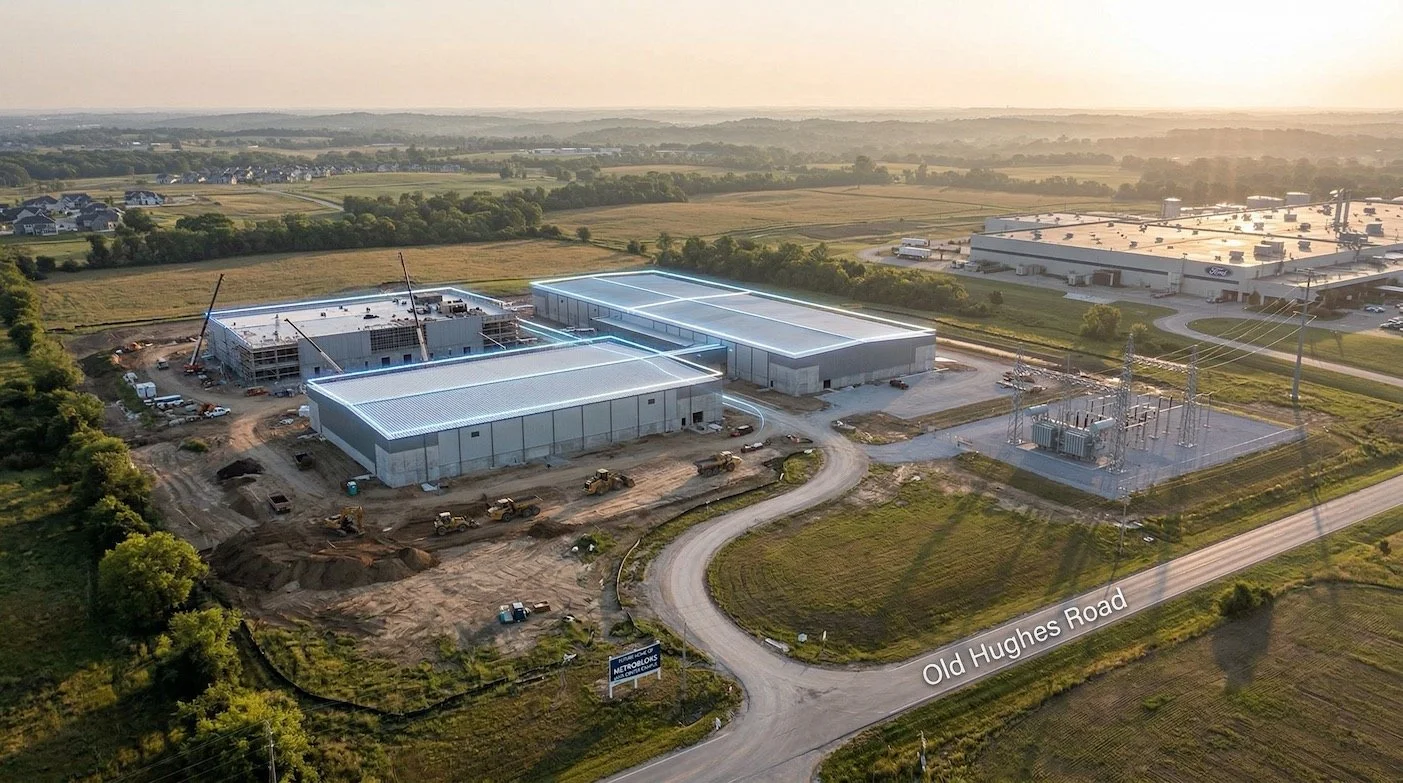
At the center of this project is a 568,800-square-foot data center campus planned for 2525 Old Hughes Road in Liberty. The site sits on nearly 29 acres just east of the Ford Stamping Plant, positioning it within an existing industrial and infrastructure-ready corridor.
The development will include three separate data center buildings designed to support cloud computing, artificial intelligence workloads, and enterprise-level data storage. This is not speculative space. The design is built around high-availability systems and low-latency computing, meaning it is intended to serve clients who require immediate, high-speed data processing capacity.
The scale matters here, but so does the positioning. While this campus is described as smaller compared to some of the region’s largest data center proposals, it still represents a billion-dollar investment and introduces a new layer of digital infrastructure into Liberty’s economic base.
What this means in practice is that Liberty is no longer simply competing as a residential or light industrial suburb. It is now part of a broader network of locations supporting the digital backbone of AI and cloud computing.
Who Is Involved and How the Deal Is Structured
The project is being led by Metrobloks, a Los Angeles-based digital infrastructure company founded in 2024. The company focuses specifically on building data centers that support AI-driven workloads, which require significant computing power and specialized design considerations.
To secure the project, Liberty approved an incentive package valued at approximately $229.2 million. That package includes several layered components:
• A 25-year, 75 percent real property tax abatement
• A 25-year personal property tax abatement starting at 100 percent for five years, then stepping down to 90 percent for the remaining 20 years
• A sales tax exemption on construction materials
Together, these abatements account for more than $200 million of the total incentive value, with additional relief tied to construction costs.
Where this becomes more complex is in how those incentives translate into long-term returns. Over a 25-year period, the project is expected to generate approximately $49 million in tax revenue for local jurisdictions. That is a meaningful increase compared to the minimal tax contribution the land would produce if left undeveloped.
There is also a community benefits agreement tied to the project. Metrobloks and its tenants are expected to contribute $27.75 million over 25 years to a newly created nonprofit focused on AI education and research. This introduces a workforce development and educational component that extends beyond the physical project itself.
Why This Type of Development Is Happening Now
One pattern that continues to develop is the rapid expansion of infrastructure tied to artificial intelligence and cloud computing. Data centers are no longer niche projects. They are becoming essential facilities that support everything from enterprise systems to everyday consumer applications.
The demand driving this project is tied to several overlapping factors:
First, AI workloads require significantly more computing power than traditional data processing. That increases the need for specialized facilities designed to handle higher energy loads and cooling requirements.
Second, companies are prioritizing geographic distribution. Rather than concentrating all computing power in a few major hubs, there is a shift toward building regional infrastructure that reduces latency and improves performance.
Third, communities like Liberty are positioned to compete. Available land, proximity to existing infrastructure, and the ability to structure incentive packages make these locations viable alternatives to more saturated markets.
The part that deserves closer attention is how energy and infrastructure are being handled. This campus is expected to scale up to 150 megawatts of power usage at full buildout, with the first phase starting at 24 megawatts. To support that demand, the developer plans to construct its own substation and participate in specialized utility pricing structures designed for high-demand users.
That level of infrastructure investment signals long-term commitment. These are not short-cycle developments. They are intended to operate for decades.
Points of Tension and What’s Being Debated
As with other large-scale data center projects across the Kansas City metro, this development introduces a set of tradeoffs that are being actively debated.
The most visible point of tension is the incentive package. While the long-term tax revenue is projected to increase significantly, the upfront abatements reduce near-term tax contributions. This raises questions about how quickly the broader community sees financial benefits.
Another area of discussion centers on job creation. The project is expected to produce approximately 30 permanent jobs with average wages around $95,000. While those are high-paying positions, the total number of jobs is relatively small compared to the scale of the investment.
This creates a different economic profile than traditional industrial or commercial developments. The value is tied more to infrastructure and long-term positioning than to immediate employment growth.
There are also considerations around energy usage and environmental impact. Data centers are energy-intensive by nature, and while this project includes energy- and water-efficient design elements such as closed-loop cooling systems, the overall power demand remains significant.
At the same time, proponents emphasize the strategic importance of participating in the digital economy. The argument is that these types of projects help position communities for future growth, even if the immediate benefits are not as visible as other forms of development.
What this means in practice is that cities like Liberty are making calculated decisions about how to balance current needs with future opportunities.
Broader Implications for Kansas City Real Estate
This project fits into a larger pattern across the Kansas City metro. Data center and infrastructure investments are increasingly shaping how land is used, how utilities are developed, and how communities position themselves for growth.
For residential real estate, the impact is indirect but meaningful.
Areas near major infrastructure investments often experience increased attention over time. This can influence everything from housing demand to long-term property values, particularly if the surrounding area sees additional development tied to the initial project.
At the same time, these projects do not create immediate housing demand in the same way that large employment centers do. The limited number of permanent jobs means the ripple effect is more gradual.
However, the presence of high-value infrastructure can shift perception. It signals stability, investment, and future potential, all of which contribute to how a market evolves.
What This Means If You’re Actually Moving
• Areas near Liberty and the Northland may continue to see long-term attention from developers and investors
• This type of project does not create immediate housing demand, but it does influence future growth patterns
• Buyers should pay attention to infrastructure development as an indicator of where markets may strengthen over time
• Sellers in surrounding areas may benefit from increased visibility, even if pricing changes are gradual
• Timing decisions should be based on personal needs, not speculation around large projects like this
• Understanding local development pipelines can help you make more informed decisions about location
• Energy and infrastructure projects often shape neighborhoods in ways that take years to fully materialize
The Fosgate Perspective
The assumption that every billion-dollar project immediately translates into a surge in housing demand is where most people misread situations like this. What’s actually happening is more foundational. Projects like this reshape how a city is positioned for the next decade, not the next six months. If you’re making a real estate decision, the opportunity isn’t in trying to time the impact. It’s in understanding where long-term stability and investment are quietly building, and aligning your decision with that trajectory rather than reacting to headlines.