Kansas City’s Shift on Energy Efficiency Rules Signals a Broader Housing Tradeoff
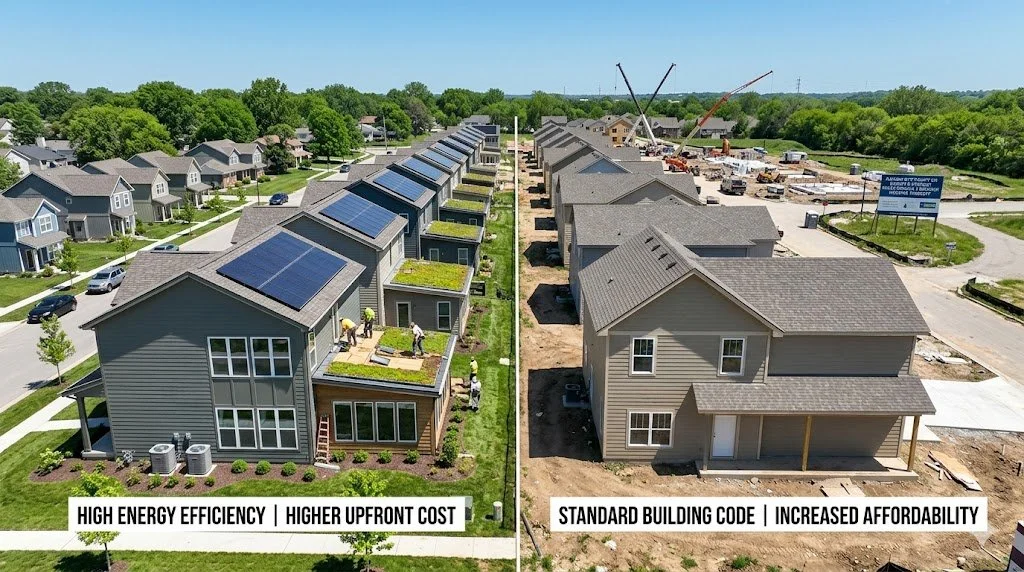
Lately, we’re seeing a noticeable shift in how cities balance long-term sustainability goals with the immediate realities of development costs and housing supply. Kansas City has become a clear example of this tension, as local leaders move to scale back previously adopted energy efficiency standards for new construction and major renovations.
What’s unfolding here is not a quiet technical adjustment. It represents a meaningful recalibration of how the city approaches building requirements, affordability, and growth. At its core, this change reflects a growing concern that stricter energy rules, while well-intended, may be contributing to higher construction costs at a time when housing availability and affordability are already under pressure.
The result is a policy decision that carries implications well beyond construction details. It directly affects how homes are built, how much they cost, and how quickly new inventory can come to market.
What Changed and Why It Matters
A key part of this situation centers on Kansas City’s decision to step back from enforcing more aggressive energy efficiency standards that had been scheduled to take effect. These standards were tied to updated building codes that would have required higher performance levels in areas like insulation, electrification, and overall energy use.
City leadership ultimately chose to pause or roll back portions of these requirements after hearing sustained concerns from builders and developers. The argument was straightforward. The added cost of meeting stricter energy benchmarks was making projects more expensive to build, and those costs were being passed directly to buyers and renters.
Where this becomes more complex is in how those costs are measured. While energy-efficient construction can reduce long-term utility expenses, the upfront cost increase can impact whether a project moves forward at all. For many developers, especially those working on entry-level or workforce housing, even modest cost increases can make a project financially unworkable.
What this means in practice is that Kansas City is prioritizing near-term housing production and cost control over longer-term energy savings, at least for now.
Who Is Driving the Decision
The push to revise these standards has come largely from the development and construction community. Builders have consistently raised concerns that the newer codes were too aggressive for the current market environment, particularly given rising material costs, labor shortages, and financing challenges.
City officials, including members of the council and administrative leadership, have had to weigh those concerns against sustainability goals that had previously been a priority. The decision to roll back parts of the code reflects a recognition that housing supply remains one of the most immediate pressures facing the metro.
One pattern that continues to develop is the growing influence of housing availability in shaping policy decisions. When supply is tight, policies that increase costs tend to face greater scrutiny, even if they offer long-term benefits.
On the other side of the conversation are sustainability advocates and environmental groups who view the rollback as a step in the wrong direction. Their position focuses on the long-term impact of less efficient buildings, including higher energy consumption, increased utility costs over time, and broader environmental consequences.
This creates a clear divide between short-term affordability and long-term efficiency, with both sides presenting valid concerns.
The Cost Debate Beneath the Surface
The part that deserves closer attention is how cost is being framed in this conversation. Builders emphasize upfront construction expenses, which are immediate, visible, and directly tied to whether a project gets built. Sustainability advocates focus on lifecycle costs, including energy savings that accrue over years or decades.
Both perspectives are technically accurate, but they operate on very different timelines.
For a developer deciding whether to move forward with a project, upfront cost increases carry more weight than long-term savings that will benefit future occupants. This is especially true in segments of the market where margins are already tight.
At the same time, less efficient buildings can create higher operating costs for homeowners and tenants over time. That means lower construction costs today could translate into higher monthly expenses later.
What’s unfolding here is not just a policy adjustment. It is a reflection of how different stakeholders prioritize time horizons, risk, and financial responsibility.
From a real estate standpoint, this dynamic directly influences pricing, buyer expectations, and the types of homes that get built.
How This Affects Development and Inventory
A key outcome of this decision is the potential for more projects to move forward in the near term. By reducing regulatory cost burdens, the city is creating a more predictable and potentially more feasible environment for builders.
That matters in a market like Kansas City, where demand has remained steady but inventory constraints continue to shape buyer behavior.
Lately, we’re seeing that even small shifts in construction feasibility can influence whether new housing supply reaches the market. When projects stall due to cost pressures, it tightens inventory further and puts upward pressure on pricing.
By easing energy requirements, the city is effectively lowering one barrier to entry for development. This could lead to:
• More entry-level and mid-range housing projects moving forward
• Shorter timelines from planning to construction
• Greater willingness from builders to take on new developments
At the same time, there is a tradeoff. Homes built under less stringent standards may not deliver the same level of energy efficiency, which can influence long-term ownership costs and buyer preferences.
This creates a layered market where construction standards, operating costs, and purchase price all interact in more visible ways.
The Broader Policy Tension Taking Shape
What’s happening in Kansas City reflects a broader pattern playing out in many markets. Cities are increasingly forced to choose between competing priorities that do not always align neatly.
On one side is the need to expand housing supply quickly and keep costs manageable. On the other is the desire to improve building performance, reduce environmental impact, and promote long-term sustainability.
One pattern that continues to develop is that affordability pressures tend to take precedence when housing availability becomes constrained. That does not eliminate sustainability goals, but it often delays or reshapes how they are implemented.
Where this becomes more complex is in the long-term implications. Decisions made today about building standards will influence the housing stock for decades. Once homes are built, their efficiency levels are largely fixed unless significant retrofits are made later.
That means today’s policy decisions are not just about current market conditions. They are shaping the future operating costs and environmental footprint of the entire housing inventory.
What this means in practice is that Kansas City is entering a phase where flexibility and adaptability in policy are becoming essential, but not without tradeoffs.
What This Means If You’re Actually Moving
• New construction may become slightly more accessible as some cost pressures on builders ease
• You may see more inventory in certain price ranges as projects that were previously on hold move forward
• Energy efficiency features could vary more widely between homes, making property comparisons less straightforward
• Monthly ownership costs may shift, with potentially lower purchase prices but higher utility expenses in some cases
• Builders may offer optional upgrades rather than standard high-efficiency features, changing how homes are marketed
• Timing decisions could matter more, especially if additional policy changes continue to evolve
• Buyers will need to look beyond price and evaluate total cost of ownership more carefully
The Fosgate Perspective
What’s easy to miss in this conversation is that this is not a simple step backward or forward. It is a recalibration based on current market pressure. The real risk is assuming that lower upfront costs automatically mean better affordability, or that higher efficiency always delivers meaningful savings in practice. The right answer depends on how long you plan to own the home, how you use it, and how energy costs evolve over time. The buyers and sellers who navigate this well are the ones who look at the full picture rather than reacting to a single headline.