The Renovation Regrets We Keep Seeing in Kansas City Homes
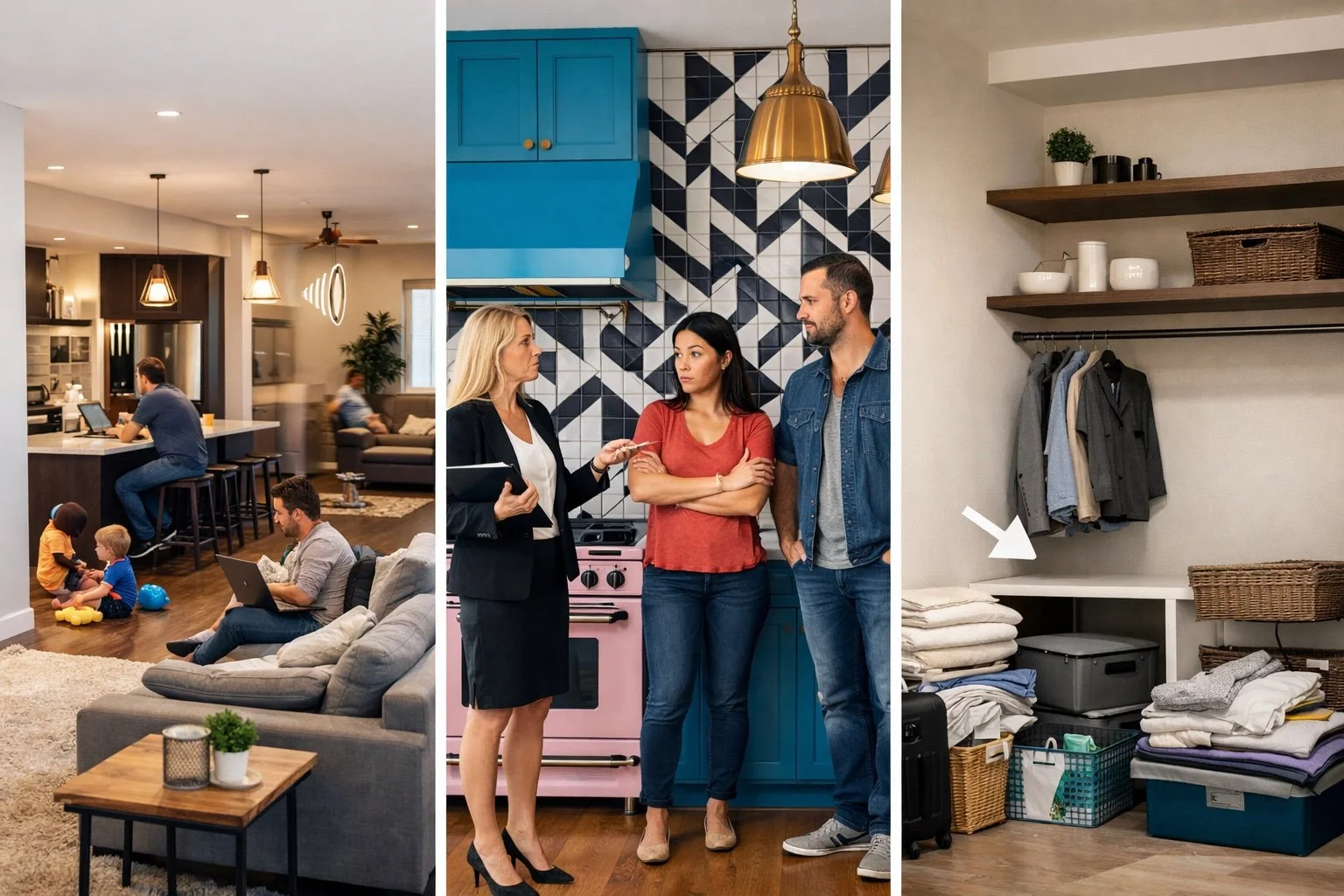
Lately, we’re seeing more homeowners in the Kansas City Metro reconsidering renovation decisions they made in the past few years.
Not because the work was poorly done. Not because they overspent. But because what felt exciting in the moment is now creating friction when it’s time to live in the space or sell it.
One pattern that keeps coming up in higher price points is this: design decisions are being made for impact instead of longevity.
In real transactions, this shows up as buyers walking into a beautifully finished home and quietly calculating what they will need to undo.
That is where regret begins.
Open Concepts That Went Too Far
A question we’re hearing more often from buyers above $700,000 is this: where do we work, read, or close a door?
Over the past decade, many homes were opened up dramatically. Walls came down. Formal rooms disappeared. Kitchens expanded into everything.
But in real life, especially in Kansas City winters when we are indoors more, people crave separation. Noise control matters. Privacy matters. Hybrid work made that very clear.
Where people are getting tripped up right now is assuming bigger and more open always equals more valuable.
Buyers today appreciate flow. But they also appreciate function.
Over-Personalized Kitchens and Baths
The part that deserves more attention is how permanent certain design choices really are.
Bold tile selections. Highly specific cabinet colors. Ultra-trendy fixtures. These can photograph beautifully. They feel fresh for a few years.
But when a $900,000 buyer walks through a home in Briarcliff, Hallbrook, or Liberty and immediately sees a full remodel in their future, that enthusiasm softens.
In higher price brackets, buyers expect quality. They do not expect to inherit someone else’s taste.
Storage That Was an Afterthought
Another regret we see frequently is sacrificing storage in favor of aesthetic minimalism.
Floating shelves instead of upper cabinets. Oversized primary showers that eliminate linen closets. Converted dining rooms that removed built-in storage.
In Kansas City homes, especially those built before 2000, storage was part of the architecture. When it disappears, daily life becomes harder.
Buyers notice this immediately. And they adjust their offers accordingly.
Chasing Trends Instead of Solving Problems
Lately, we’re seeing homeowners realize that some renovations solved a design trend but did not solve a lifestyle issue.
If the family still gathers in the same corner of the kitchen. If the mudroom still feels cramped. If the primary suite still lacks natural light.
The renovation may look impressive. But it did not improve how the home lives.
That distinction matters in this market.
The Fosgate Perspective
If we were sitting at your kitchen table having this conversation, here is what we would say.
Renovation regret is rarely about money. It is about misalignment.
The misunderstanding right now is assuming that resale value is driven by how dramatic a renovation looks. In our experience across the Kansas City Metro, resale value is driven by how effortlessly a home functions.
Buyers in the $500,000 to $1.5 million range are thoughtful. They are not easily distracted by trends. They are evaluating how a home will feel in February when it is dark at 5 pm. They are thinking about storage. Noise. Work-from-home space. Long-term livability.
The opportunity being overlooked is this: subtle improvements often outperform dramatic ones.
Quality windows instead of oversized islands. Thoughtful lighting instead of statement lighting. Added pantry space instead of open shelving.
We would rather see a home that quietly works than one that loudly impresses.
What This Means If You’re Actually Moving
If you are renovating before selling in Kansas City, the decision deserves more thought than simply updating finishes.
Ask yourself: does this change improve how the home lives?
If you are buying a recently renovated property, look past the surface. Walk the layout slowly. Open closets. Consider sound and privacy. Think about winter light and summer humidity.
The noise you can ignore right now is social media driven design pressure. Homes are not magazine spreads. They are long-term assets and lived environments.
The steady truth is this: timeless, functional improvements age well. Trend-driven renovations often age quickly.
And in this market, calm decisions almost always outperform flashy ones.