What We Forget About Neighborhood Cycles Eventually Costs Us
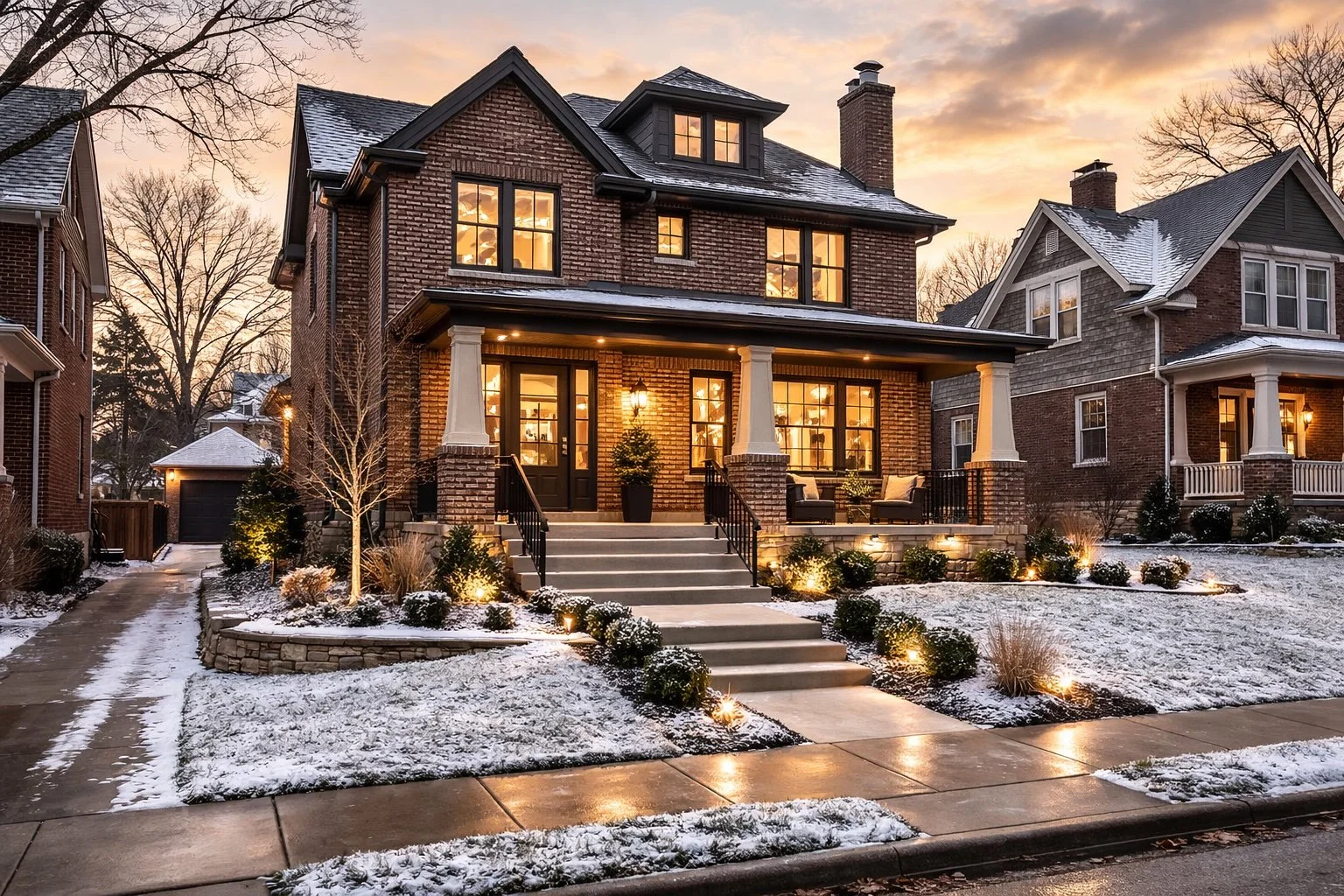
Lately, we’re seeing more conversations about revitalization, redevelopment, and how neighborhoods evolve over time.
And if you’ve been in Kansas City long enough, you know this isn’t new. Neighborhoods shift. They expand. They contract. They get reinvested in. They get overlooked. Then they get rediscovered again.
One pattern that keeps coming up in our conversations with buyers above $500,000 is this quiet assumption that what a neighborhood looks like today is what it has always been. Or what it will always be.
That’s rarely true.
Kansas City’s urban core, especially on the east side and through the Northeast corridor, has gone through multiple life cycles. What feels established now was once farmland. What feels forgotten now was once thriving. What feels transitional may eventually become stable again.
In real transactions, this shows up as hesitation around “trajectory.” Buyers want certainty. Sellers want confidence that appreciation is guaranteed.
The part that deserves more attention is that real estate is always layered. Today’s streets sit on yesterday’s decisions.
Neighborhood Memory Matters More Than We Think
A question we’re hearing more often is whether long-term appreciation depends more on architecture, school districts, or proximity to downtown.
All of those matter.
But history matters too.
When you walk older parts of Kansas City, especially along the Paseo corridor or near the historic Northeast neighborhoods, you can feel the layers. Infrastructure was built with intention. Parks were placed deliberately. Transit once ran where it no longer does. Entire communities once thrived in places that feel different today.
Where people are getting tripped up right now is assuming revitalization is a straight line. It’s not. It’s cyclical.
We’ve seen neighborhoods rebound when infrastructure investment returns. We’ve seen areas stall when development momentum pauses. We’ve also seen blocks quietly stabilize because a handful of homeowners committed long term.
In the $700,000 to $1.2M range, most buyers are not speculating. They’re placing roots. They care about legacy, not just equity curves.
That changes the lens.
The Fosgate Perspective
Here’s where we would gently push back on some of the noise.
There’s a tendency to either romanticize the past or dismiss it entirely.
Neither approach serves you well.
If you’re buying in Kansas City right now, especially near historic corridors or emerging redevelopment zones, the question is not “Is this area perfect?” The better question is “What has this area proven it can be over time?”
We’ve walked properties where the architecture tells a story of original investment and civic pride. Even after decades of change, that underlying framework still exists. That matters.
What we would say to a close friend is this: pay attention to the bones of a neighborhood. Street layout. Park access. Lot sizes. Original housing stock quality. Those fundamentals tend to outlast short-term cycles.
Where sellers sometimes misunderstand things is assuming current momentum will carry forever. It rarely does. Strategic pricing still matters. Condition still matters. Buyers above half a million dollars are thoughtful. They evaluate context carefully.
Cycles reward patience. They do not reward denial.
What This Means If You’re Actually Moving
If you’re considering buying in Kansas City’s urban core or in an area that feels “in transition,” spend more time studying its full life cycle, not just its last five years.
Look at infrastructure commitments. Look at homeowner tenure. Look at how properties held value during slower periods.
If you’re selling in a historic or evolving neighborhood, understand that your buyer is thinking long term. They are not just buying square footage. They are buying trajectory.
What noise can you safely ignore right now?
The idea that every neighborhood must either boom or bust.
Kansas City rarely behaves that way. More often, it moves in phases.
The buyers and sellers who navigate those phases well are the ones who understand that neighborhoods have memory.
And memory, in real estate, has weight.