The Private Listings Debate Is a Distraction
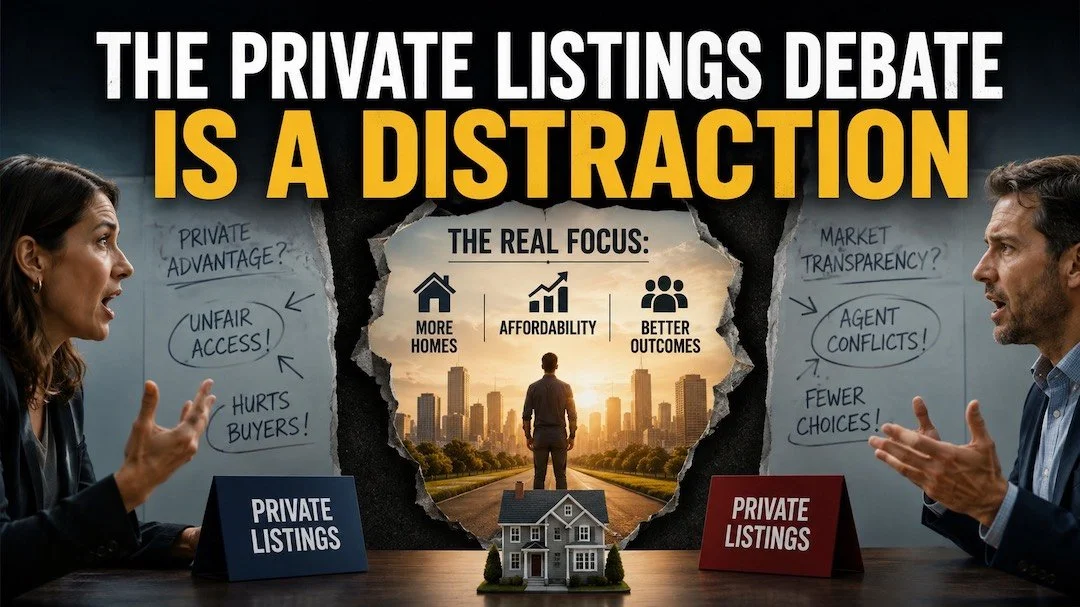
The modern tragedy of the American housing market is not that the math has become difficult; it is that the gatekeepers have been looking the wrong way. For the past two years, while the fundamental dream of property ownership slipped quietly out of reach for a generation, the leadership class of the real estate industry remained locked in an intense, self-referential battle. It was a turf war waged in boardrooms and federal courtrooms over a single, proprietary question: Should home listings be hidden from the general public and concentrated inside exclusive corporate networks?
While brokerages litigated the mechanics of inventory hoarding, the reality on the ground hardened. In 2025, the share of first-time homebuyers in America plummeted to a record low of 21%, while the typical age of those rare, successful first-time buyers climbed to an all-time high of 40 years. Today, more than three in five Americans feel that buying a home is an unrealistic ambition. The friction of this moment is felt acutely across the Kansas City metro, from the historic streets of Brookside to the expanding suburbs of Johnson County, where local families find themselves competing not just with each other, but with a structural deficit of opportunity.
The industry's internal debate has felt less like strategic stewardship and more like institutional self-absorption. At exactly the moment when buyers and sellers required transparent advocacy, the conversation turned inward, transforming a public marketplace into a series of private clubs.
The Illusion of Seller Choice
The battle lines were drawn around the National Association of Realtors' Clear Cooperation Policy, a rule enacted in 2020 to ensure that any property publicly marketed had to be shared with the broader broker community via the MLS within one business day. It was designed as an equalizer, ensuring that a buyer working with an independent agent in Lee's Summit had the same access to inventory as a client of a multinational brokerage.
However, the country’s largest residential brokerages pushed back aggressively, framing their resistance as a defense of client privacy and marketing flexibility. The resulting policy compromise, rolled out late last year, allowed listings to be marked as "delayed," effectively withholding them from public real estate portals while keeping them within proprietary networks.
The reality of these private listing networks is far less altruistic than the corporate talking points suggest. In practice, a private network allows a brokerage to advertise a home internally before it ever touches the broader market. Critics point out the obvious corporate incentive: keeping both sides of the transaction within the same firm allows the brokerage to collect a double commission.
James Dwiggins, one of the industry's most vocal reform advocates, cut through the corporate messaging bluntly, noting that the strategy is nothing more than an effort to maximize company revenue under the guise of seller choice. In an environment already starved for buyers, limiting a property's exposure rarely serves the person trying to sell it.
The Invisible Cost of Hidden Inventory
To believe that private networks benefit consumers requires ignoring a mountain of empirical evidence. The financial penalty for bypassing the open market is quantifiable and severe. Recent data compiled by Zillow reveals that home sellers who kept their listings off the MLS left more than $1 billion on the table nationally over a two-year period. In major metropolitan markets, selling a home through a private network yielded tens of thousands of dollars less than a traditional, public sale.
A comprehensive multi-state study by BrightMLS and Drexel University confirmed this premium, showing that homes listed on the open MLS sold for an average of 17.5% more than comparable off-MLS properties. For a typical homeowner, that difference represents tens of thousands of dollars in lost equity, money that could have funded a retirement or paid for a child’s education.
Despite this evidence, a deep cognitive dissonance persists within the real estate profession. Surveys indicate that 56% of agents still believe private sales lead to higher prices, a statistic that highlights how effectively large corporate brokerages have managed their internal messaging.
The harm extends beyond the seller’s balance sheet. When large brokerages withhold inventory, they artificially worsen the housing shortage. In some regional markets, local inventory would be more than 20% higher if private listings were made public. For Kansas City buyers navigating an already tight market, this artificial scarcity turns an difficult search into an impossible one.
A Disproportionate Burden on Fair Housing
The consequences of private networks are not distributed equally. The shift toward hidden inventories has introduced a subtle, structural layer of inequity into a housing market already strained by rising discrimination complaints.
Research shows a troubling disparity in how private listings are presented to consumers. Black and Hispanic home sellers are advised to list their properties off the MLS at significantly higher rates than white sellers. Nearly three-quarters of minority sellers reported that their agent recommended using a private network, compared to just 24% of white sellers.
When communities of color are systematically guided away from the open market, they are disproportionately exposed to the financial penalties of off-MLS sales. This pattern undercuts decades of progress toward fair housing. By restricting the visibility of available homes to elite, hyper-localized networks, the industry risks reviving historical patterns of exclusion under the modern banner of corporate exclusivity.
The Reality Outside the Boardroom
While the industry litigated antitrust claims and portal access, the macroeconomic environment for ordinary citizens deteriorated to historic levels. Renters are facing unprecedented cost burdens, with nearly half of American tenants paying more than 30% of their income just to keep a roof over their heads.
The financial mechanics of homeownership have become equally punishing. Data from the Atlanta Fed indicates that owning a median-priced home now consumes nearly 48% of a typical household’s income. Concurrently, institutional investors have stepped into the void, capturing a record 30% of single-family home purchases nationally.
Against this backdrop, the energy spent on the private listings debate appears profoundly misaligned. The consumer demand for these hidden networks is virtually nonexistent. In field surveys, nearly 70% of real estate agents reported that not a single client had ever inquired about listing a home privately. The push for these networks is coming from corporate boardrooms, not from the families living on quiet suburban streets.
The industry’s leadership class spent its capital protecting market share at a time when the public needed advocates for supply-side reform, zoning relief, and first-generation buyer programs.
The Path Forward for Kansas City
For real estate professionals and residents across the Kansas City metro, the national debate provides an important moment of clarity. Local institutions, including the Heartland MLS, have had to adapt to these shifting national policies, but the ethical mandate for local practitioners remains unchanged.
Broad market exposure remains the most effective way to secure a property’s true value. Recommending an exclusive corporate network without comprehensive, data-backed disclosure exposes an agent to significant fiduciary risk. In an era where real estate practices face intense legal and public scrutiny, transparent, client-first advice is an agent's most valuable asset.
Kansas City buyers who are being priced out by institutional capital or equity-rich buyers from coast to coast do not need their representation consumed by corporate turf wars. They need professionals who treat housing as a community asset rather than a proprietary secret. The leaders who will matter most over the next decade are those focused on building public trust through clarity, transparency, and a commitment to the open market.
Navigating the complexities of today's real estate market requires more than access to a private network; it requires a partner dedicated to absolute transparency and proven results. Whether you are looking to maximize your home’s value on the open market or trying to find a place for your family to grow, Team Fosgate Real Estate offers the clear, client-first guidance you need in a changing landscape.