The Institutionalization of West Olathe
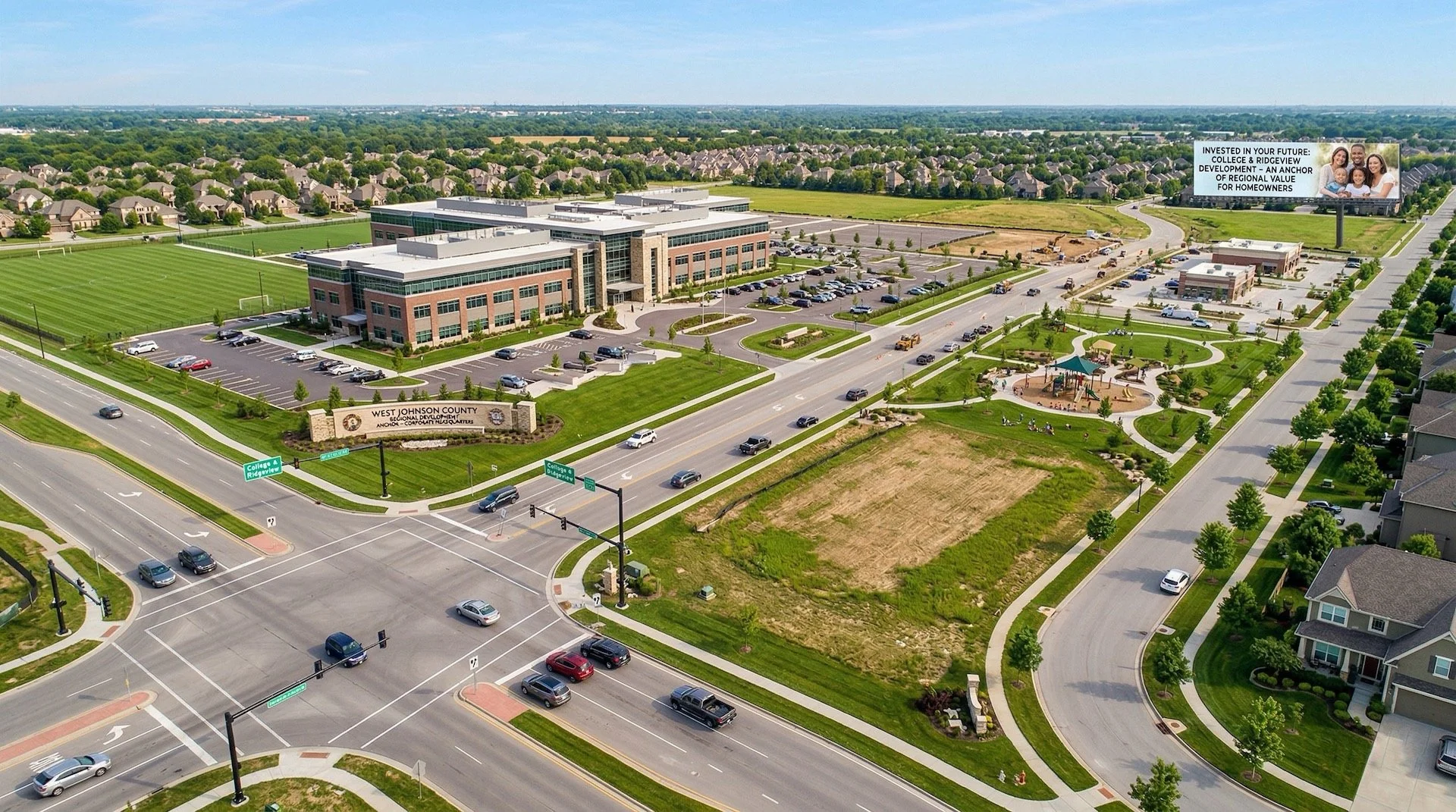
The announcement of the Kansas City Chiefs’ new $300 million headquarters and training facility at College Boulevard and Ridgeview Road represents more than a local construction project. It is the definitive signal that West Olathe has transitioned from a developing suburban fringe into a premier institutional corridor. This move follows a predictable pattern where massive commercial anchors validate high-end residential growth, permanently altering the valuation floor for surrounding neighborhoods.
For decades, the 165-acre site remained a vacant placeholder in an otherwise rapidly maturing landscape. While the Garmin Olathe Soccer Complex and various hospitality projects began to fill the gaps, the absence of a primary anchor left the area’s identity unfinished. The arrival of a world-class sports franchise provides the finality needed to drive long-term capital investment and infrastructure upgrades.
This shift creates a ripple effect for property owners and prospective buyers in Johnson County. When a global brand chooses a specific intersection for its daily operations, the surrounding real estate ceases to be speculative. We are seeing the "professionalization" of the Ridgeview corridor, which will inevitably lead to a compression of cap rates for commercial assets and a premium on residential inventory within a five-mile radius.
The True Anchor Effect
The value here is not found in the proximity to athletes, but in the infrastructure that follows them. A $300 million investment necessitates significant road improvements and utility enhancements that the city might otherwise have deferred. These upgrades solve the "last mile" friction that often holds back suburban property values. For the move-up buyer, this means the logistical headaches of West Olathe—specifically traffic flow near K-10—are finally being addressed with the urgency of a public-private partnership.
The Tension of the "Entertainment District"
While local excitement focuses on new restaurants and foot traffic, the sophisticated observer looks at the density. The plan includes a surrounding entertainment district, which suggests a shift toward mixed-use zoning in an area historically dominated by single-family detached homes. This creates a tension between the quiet suburban life many moved to Olathe for and the urban-suburban hybrid model now favored by developers. This evolution typically increases land value but can alter the "neighborhood feel" that initially drove residential demand.
The Kansas City Local Connection The relocation of the Chiefs' headquarters to Olathe, paired with the $3 billion stadium project in KCK, marks a historic pivot toward the Kansas side of the metro. This is a strategic realignment of the region’s economic gravity. By centering their daily operations in Johnson County, the Chiefs are anchoring themselves in the heart of the metro’s highest-earning demographic. This reinforces Olathe and Lenexa as the primary beneficiaries of the "pro-sports halo," attracting ancillary businesses, medical facilities, and executive-level housing demand that follows the team’s orbit.
What This Means If You’re Actually Moving
Anticipate a sustained rise in property taxes as land valuations are reassessed to reflect the new commercial utility of the area.
Prioritize homes with established buffer zones or mature landscaping to mitigate the increased light and noise pollution from a 24/7 entertainment district.
Expect a temporary dip in lifestyle convenience during the multi-year construction phase, particularly at the K-10 and Ridgeview interchange.
View the surrounding undeveloped parcels as high-probability sites for luxury townhomes or high-density rentals, which may change your long-term views.
Recognize that "distance to the Chiefs HQ" will become a legitimate marketing bullet point for resale, even for buyers who are not sports fans.
Monitor city council sessions for zoning changes; the transition from "empty field" to "HQ" often opens the door for more aggressive commercial infill.
The Fosgate Perspective
Real estate cycles are often defined by the presence of "sticky" capital—investment that cannot easily leave once it is planted. The Chiefs' commitment to Olathe is the ultimate form of sticky capital. While retail trends fluctuate, a team headquarters creates a permanent employment and tourism hub that insulates the local housing market from broader economic volatility. We are no longer talking about Olathe as a bedroom community; we are talking about it as a primary economic engine for the Midwest.